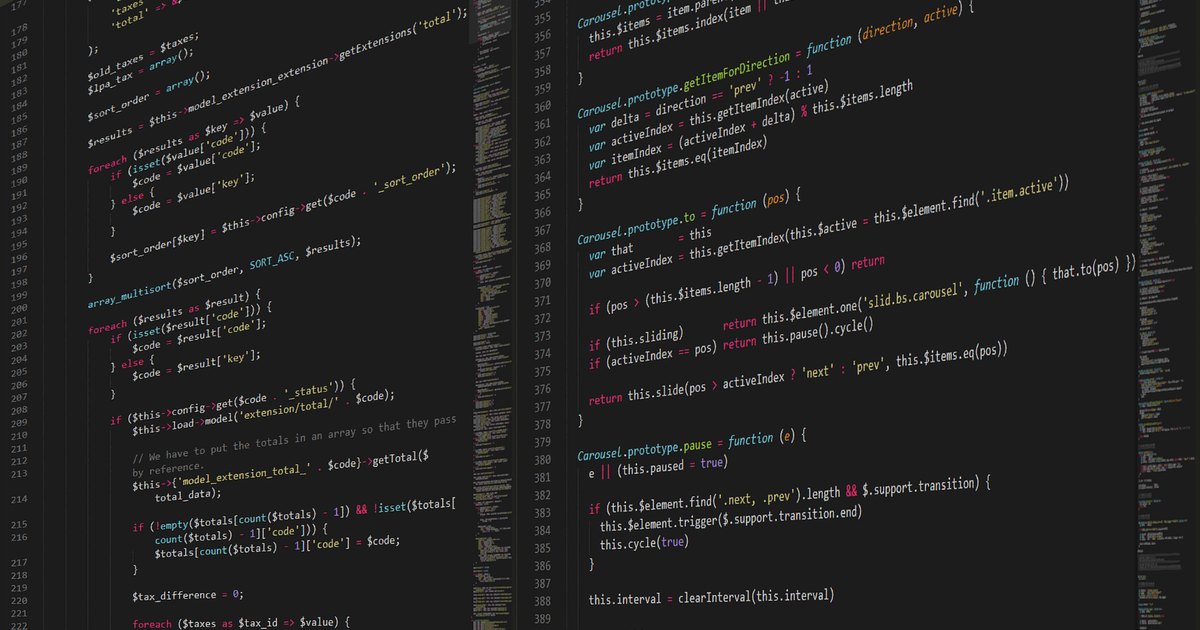
Somewhere in the last six months, a phrase that started as a throwaway comment from an AI researcher became the defining software development trend of 2026. Vibe coding — the practice of describing what you want in plain English and letting AI write the code — went from a novelty demo to a $4.7 billion market practically overnight.
If you run a growing company, you've probably heard the pitch already. Maybe from a board member who read a breathless LinkedIn post. Maybe from a team lead who prototyped something over the weekend. Maybe from a vendor promising to cut your development costs by 70%. The message is always the same: AI can write code now, so software should be faster, cheaper, and easier than ever before.
That message is partially right. And the part that's wrong could cost you more than the old way ever did.
This isn't a technology article. It's a business strategy article. Because vibe coding isn't fundamentally a developer tool question — it's a question about how you invest in software, how you manage risk, and whether the shortcuts you take today will compound into problems you can't afford tomorrow.
What Vibe Coding Actually Is (And Isn't)
The term "vibe coding" was coined by Andrej Karpathy, a former Tesla AI director and OpenAI co-founder, in early 2025. His description was disarmingly casual: "You just see things, say things, run things, and copy-paste things, and it mostly works." The idea is that instead of writing code line by line, you describe what you want — a login page, a data pipeline, an inventory management system — and an AI model generates the code for you.
In practice, it looks like this: a developer opens a tool like Claude Code, Cursor, or GitHub Copilot, types a natural-language prompt describing the desired functionality, and receives working code in seconds. The developer reviews it, runs it, adjusts the prompt if something isn't right, and iterates until the output matches what they need.
The adoption numbers are staggering. As of early 2026, 92% of developers in the United States use AI coding tools daily. That's not a typo. The vibe coding market hit $4.7 billion this year, growing at a 38% compound annual rate. Over 84% of developers in the latest Stack Overflow survey say they use or plan to use AI coding tools. Claude Code alone went from 4% developer adoption in May 2025 to 63% by February 2026.
Here's what makes this different from every previous developer productivity trend: it doesn't just make experienced developers faster. It allows people with no programming background to build functional software. A marketing manager can prototype a customer dashboard. A finance analyst can build a reporting tool. A founder can create an MVP without hiring an engineer.
That democratization is real. But so is the gap between "functional prototype" and "production-grade system that handles real data, real users, and real edge cases."
What vibe coding is good at: rapid prototyping, scaffolding standard UI components, generating boilerplate code, writing unit tests, building internal tools for small teams, and exploring ideas quickly. Developers using AI coding assistants report saving approximately 3.6 hours per week and an average productivity increase of 31% compared to traditional approaches.
What vibe coding is not: a replacement for software architecture, security engineering, performance optimization, data modeling, or the kind of deep systems thinking that makes the difference between software that works in a demo and software that works at scale under real-world conditions.
The distinction matters enormously. And if you're making investment decisions about your software strategy, it's the distinction that will determine whether you capture value or create risk.
The Real Numbers Behind AI-Generated Code
Let's set aside the marketing narratives and look at what the research actually shows. Because the data paints a far more nuanced picture than either the evangelists or the skeptics want to acknowledge.
The productivity gains are real, but modest. Developers save about 3.6 hours per week — meaningful, but not the order-of-magnitude improvement the headlines suggest. Overall productivity has leveled off at roughly 10% improvement since AI coding tools took off. The 31% self-reported productivity gain is likely inflated by novelty bias and the tendency to measure speed without measuring quality.
AI-generated code now represents about 27% of all production code. Between November 2025 and February 2026, AI-authored code reached 26.9% of all merged production code, up from 22% the previous quarter. That's a significant and accelerating trend. But it also means 73% of production code is still being written, reviewed, and refined by humans.
The quality gap is measurable and concerning. A December 2025 analysis by CodeRabbit of open-source GitHub pull requests found that AI-authored code contains approximately 1.7 times more major issues compared to human-written code. Specifically:
- Logic errors appear 1.75x more frequently
- Code quality and maintainability issues are 1.64x more common
- Security findings are 1.57x more frequent
- Performance issues are 1.42x more likely
Research from Veracode puts the security vulnerability rate even higher: roughly 40-62% of AI-generated code contains security flaws. Cross-site scripting errors appeared in 86% of AI-generated cases. SQL injection — a vulnerability class that competent developers eliminated from their code years ago — still shows up in 20% of AI-generated samples.
The maintenance cost problem is the sleeper issue. GitClear's analysis of 211 million lines of code found that AI-assisted codebases show 60% less refactored code, 48% more copy-paste patterns, and doubled code churn. First-year costs with AI coding tools run approximately 12% higher when you account for the complete picture: 9% code review overhead, 1.7x testing burden from increased defects, and 2x code churn requiring constant rewrites.
And the second year is where it really hurts. By year two, unmanaged AI-generated code drives maintenance costs to four times traditional levels as technical debt compounds exponentially.
These aren't theoretical concerns. They're measured outcomes from real codebases at real companies.
Why "Fast and Cheap" Is the Wrong Frame
Here's the conversation that happens in boardrooms across every industry right now: "If AI can write code, shouldn't our next software project cost a fraction of what the last one did?"
It's a reasonable question with a dangerously incomplete answer.
Yes, AI-assisted development has reduced certain costs. A GoodFirms survey found that 91% of software companies now use AI to cut development costs, and 61% of respondents expect AI to reduce project budgets by 10-25%. Forrester reports an average 32% reduction in total development costs. What once required $100,000 and a team of specialists can sometimes be accomplished for significantly less.
But cost reduction in the writing phase doesn't mean cost reduction across the full lifecycle. And for any system that matters to your business — that handles customer data, processes transactions, integrates with other systems, or needs to scale — the writing phase is only 20-30% of the total cost of ownership.
The real costs live elsewhere:
Architecture decisions that compound. When an AI scaffolds your application, it makes hundreds of implicit architecture decisions — database schema design, API structure, authentication patterns, state management approaches, error handling strategies. These decisions are invisible in a prototype but determine whether your system can evolve over the next three to five years. Bad architecture that works today becomes software you've outgrown tomorrow — except now you've built an entire business on top of it.
Security that isn't optional. If your system handles any form of personal data — and in 2026, it almost certainly does — security vulnerabilities aren't just technical issues. They're legal liabilities. The EU AI Act reaches full enforcement in August 2026. GDPR penalties have been escalating. And AI-generated code is 2.74x more likely to introduce XSS vulnerabilities and 1.82x more likely to implement insecure deserialization than code written by experienced developers. A notable 2026 case study from security firm Wiz found a production database left with public read and write access — because the AI scaffolded it with permissive settings during development, and the non-technical founder deployed it as-is.
Integration complexity that doesn't shrink. Your new system doesn't exist in isolation. It needs to talk to your CRM, your accounting software, your existing databases, your payment processor, and probably half a dozen other systems. Integration is where 71% of enterprise applications fail, and it's the area where AI coding tools are least helpful — because integration requires understanding your specific business context, data flows, and edge cases that no AI model has been trained on.
The "comprehension debt" problem. Traditional technical debt means your code is messy and hard to maintain. Comprehension debt is worse: it means the humans responsible for the code don't actually understand what it does. When AI writes code that passes tests but nobody on your team can explain, you've created a system that nobody can safely modify, debug, or extend. Every future change becomes a gamble.
The companies getting hurt aren't the ones who ignored vibe coding. They're the ones who adopted it without understanding these second-order effects.
The Vibe Coding Maturity Spectrum
Not all applications of AI-assisted development carry the same risk profile. The critical strategic question isn't "should we use vibe coding?" It's "where does it create value, and where does it create danger?"
Think of it as a spectrum with four levels:
Level 1: Internal Prototypes and Throwaway Tools
Risk: Low. Value: High.
This is where vibe coding delivers unambiguous wins. A product manager needs to visualize data from a spreadsheet. An ops team wants a simple dashboard to track a process. A founder wants to test a concept before investing in development.
At this level, security requirements are minimal, the user base is small and forgiving, the lifespan is measured in weeks or months, and nobody is building a business on top of it. Vibe coding is perfect here. The speed advantage is enormous, the quality bar is appropriate, and the cost savings are real.
If your company isn't using AI tools for this kind of work already, you're leaving easy wins on the table.
Level 2: Internal Business Applications
Risk: Moderate. Value: High with proper oversight.
Internal applications that your team uses daily — workflow management tools, reporting dashboards, employee portals, knowledge bases — are a strong use case for AI-accelerated development, but with an important caveat: someone with real engineering judgment needs to own the architecture.
At this level, AI can handle 60-70% of the code generation — UI components, CRUD operations, standard business logic. But the remaining 30-40% — authentication, data access patterns, integration architecture, error handling — needs deliberate human design. The cost savings from AI acceleration are real (expect 30-50% timeline reduction), but only if the architectural foundation is sound.
This is the sweet spot for companies working with experienced consultants who use AI tools to accelerate delivery. You get the speed benefits without the quality risk, because the AI is operating within guardrails set by people who understand the consequences of structural decisions.
Level 3: Customer-Facing Products
Risk: High. Value: Depends entirely on execution.
The moment your software touches customers — their data, their money, their experience with your brand — the stakes change fundamentally. Customer-facing systems need to handle concurrent users, unpredictable inputs, edge cases that no prompt engineer anticipated, and compliance requirements that carry legal penalties.
AI tools can accelerate development at this level, but the ratio flips. Maybe 30-40% of the code benefits from AI generation — mostly UI components and standard patterns. The remaining 60-70% needs deliberate engineering: performance optimization, security hardening, data integrity guarantees, graceful degradation under load, and the kind of defensive coding that separates production systems from prototypes.
Companies that vibe-coded their customer-facing product and shipped it without rigorous review are the ones generating the cautionary tales. The security vulnerabilities. The data breaches. The midnight production incidents. These aren't hypothetical — they're happening now, and they're happening because the speed of code generation outpaced the speed of code comprehension.
Level 4: Regulated and Mission-Critical Systems
Risk: Very High. AI acceleration limited to narrow tasks.
Healthcare records systems. Financial transaction processing. Legal document management. Manufacturing control systems. Anything where a failure mode has regulatory, safety, or significant financial consequences.
At this level, vibe coding in the broad sense — describe what you want and ship what comes out — is genuinely dangerous. Only 28% of healthcare companies and 34% of financial services companies use vibe coding tools at all, and the ones that do restrict usage to narrow, well-supervised tasks: generating test cases, writing documentation, scaffolding non-critical utilities.
The reason is simple: in regulated environments, you need to understand and be able to explain every line of code. Comprehension debt isn't just a maintenance problem — it's a compliance violation. When auditors ask how your system handles patient data, "the AI wrote that part" isn't an acceptable answer.
What This Means for Your Next Software Investment
If you're planning a software investment in 2026 — whether it's a new custom system, a modernization of legacy infrastructure, or an AI integration project — vibe coding reshapes the conversation in three specific ways.
1. Development Timelines Are Genuinely Shorter
AI-assisted development has compressed realistic project timelines by 25-40% for well-architected projects. A system that would have taken six months in 2024 can reasonably be delivered in four months today — not because the thinking is faster, but because the implementation of known patterns is faster.
This is a real advantage. It means your first 90 days of automation can accomplish more. It means proof-of-concept phases are cheaper. It means iteration cycles between feedback and implementation are tighter.
But shorter timelines don't mean lower quality bars. If anything, the fact that code can be generated faster means the bottleneck has shifted from writing to reviewing, testing, and validating. The companies that benefit most from AI-accelerated development are the ones that reallocate saved development time into more thorough quality assurance — not the ones that just ship faster.
2. The "Who" Matters More Than Ever
Here's the counterintuitive truth about vibe coding: the more powerful the AI tools become, the more important it is to have experienced architects guiding the process.
An experienced engineer using AI tools is like a skilled architect using prefabricated components. They know which components to use, how they fit together, where the load-bearing walls go, and what happens when the building needs a new wing in three years. The prefab components save time without compromising structural integrity.
A non-engineer using AI tools is like giving someone a warehouse full of prefab components and asking them to build a house. They might get something that looks like a house. It might even be habitable for a while. But the first time you need to add plumbing, or the foundation shifts, or the inspector shows up, you discover that looking like a house and being a house are very different things.
This dynamic has a direct implication for how you evaluate development partners. The question is no longer "does this team write code fast?" Every team writes code fast now. The question is: "Does this team understand the architecture decisions that AI tools can't make? Can they set up the guardrails that keep AI-generated code safe, maintainable, and aligned with your business requirements?"
If you're evaluating a software consultancy, ask how they use AI tools — and more importantly, ask what they don't use AI tools for. The answer will tell you whether they understand the maturity spectrum or whether they're riding the hype cycle.
3. The Build-vs-Buy Equation Has Permanently Shifted
The SaaSpocalypse we covered in a previous analysis wasn't just about AI agents collapsing SaaS seat economics. It was also about the supply side: custom software is now dramatically cheaper and faster to build than it was even 18 months ago.
When 91% of software companies are using AI tools to reduce development costs and the average cost reduction is 25-32%, the math that used to make SaaS the obvious choice for growing companies no longer holds. The build-vs-buy decision framework has fundamentally changed.
Consider the numbers: the average mid-market company spends $4.5 million per year on SaaS subscriptions. A custom system that replaces three or four overlapping SaaS tools — purpose-built for your workflows, owning your data, designed for AI agent integration — now costs 40-70% less to build than it did in 2024. The payback period has compressed from three to five years to 12-18 months in many cases.
That doesn't mean every SaaS tool should be replaced with a custom system. It means the threshold has moved. Systems that were clearly "buy" decisions two years ago are now legitimate "build" candidates. And if you're not re-evaluating that threshold, you're making decisions based on outdated economics.
The Governance Gap Nobody Is Talking About
There's a dimension of vibe coding that gets almost zero attention in the breathless trend pieces: governance. Specifically, who owns the code that AI generates, who is responsible for its quality, and how do you maintain control as AI-generated code proliferates across your organization?
This isn't a theoretical concern. It's an operational one that's already causing problems.
Shadow development is exploding. Just as "shadow IT" described employees adopting SaaS tools without IT approval, "shadow development" describes employees building functional applications with AI tools without engineering oversight. That marketing dashboard someone vibe-coded over the weekend? It might be pulling from production databases with hardcoded credentials. That automated workflow an ops analyst built? It might be processing customer data without any of the compliance controls your engineering team would have implemented.
A 2026 survey found that 69% of organizations have unauthorized AI tools in use. The average enterprise discovers 200+ AI tools being used across the organization — more than three times the 60-70 that IT estimates. When those tools are generating code that touches real business data, the governance implications are serious.
Your AI governance framework needs to cover generated code. Most companies that have AI governance policies focused them on AI model usage — which models are approved, what data can be sent to them, how outputs should be reviewed. Very few have extended those policies to cover AI-generated code specifically. Questions like: Where is AI-generated code deployed? Who reviewed it before deployment? Does it meet your security standards? Is it documented? Can it be audited?
The compliance clock is ticking. The EU AI Act reaches full enforcement on August 2, 2026 — four months from now. Organizations using AI systems in ways that affect individuals need to demonstrate transparency, accountability, and human oversight. If your business runs on AI-generated code that nobody fully understands, you have a compliance exposure that compounds every time someone vibe-codes a new tool.
The companies that will navigate this well are the ones building governance into their development process now — not the ones trying to retroactively audit a year's worth of ungoverned AI-generated code.
A Practical Framework for Using Vibe Coding Strategically
So where does this leave you? Vibe coding is real, it's here, and ignoring it means leaving genuine efficiency gains on the table. But adopting it without a framework means accumulating risk that compounds invisibly until it doesn't.
Here's a practical approach based on what's actually working for growing companies in 2026:
Step 1: Classify Your Software by Risk Tier
Map every current and planned software system against the four-level maturity spectrum described above. Be honest about where each system falls. A system that "starts as internal" but will eventually face customers is a Level 3 system from day one — because architectural decisions made for Level 1 will need to be thrown away at Level 3.
Step 2: Set AI Usage Policies by Tier
For Level 1 (prototypes and throwaway tools): let anyone use any AI coding tool. The worst outcome is a bad prototype, and bad prototypes are cheap.
For Level 2 (internal business applications): require architectural review before development starts, use AI tools freely for implementation within approved architecture, and mandate code review by someone who understands the generated code before deployment.
For Level 3 (customer-facing products): require experienced architects to design the system and set guardrails for AI-assisted implementation. Every AI-generated component gets human review focused on security, performance, and edge cases. Allocate the time savings from faster code generation into more thorough testing.
For Level 4 (regulated/mission-critical): restrict AI tool usage to well-supervised tasks like test generation and documentation. All production code gets human review and manual sign-off. Maintain full audit trails.
Step 3: Invest in Architecture, Not Just Speed
The single highest-impact investment you can make in AI-assisted development is upfront architecture. A well-designed system architecture acts as a set of guardrails: it constrains the AI's output to patterns that are known to work, prevents the kind of structural mistakes that compound into unmaintainable systems, and makes it dramatically easier for humans to review and understand the generated code.
This is why working with experienced architects — whether internal or through a consultancy — matters more in the vibe coding era, not less. The architecture phase doesn't get faster with AI tools. It gets more important.
A solid requirements document combined with deliberate architecture decisions is worth more than all the AI-generated code in the world. Because AI can write code to any specification — including bad ones. The specification is where human judgment is irreplaceable.
Step 4: Budget for the Full Lifecycle
When evaluating project costs and timelines, resist the temptation to project from the development phase alone. AI-assisted development reduces the coding phase by 25-40%. But it increases the review phase, doesn't reduce the testing phase, and can significantly increase the maintenance phase if governance isn't in place.
A realistic budget for an AI-accelerated custom software project in 2026 looks something like:
- Architecture and requirements: 15-20% of total budget (unchanged from pre-AI)
- Development: 25-35% of total budget (down from 40-50% pre-AI)
- Review and testing: 20-25% of total budget (up from 15-20% pre-AI)
- Deployment and integration: 15-20% of total budget (unchanged)
- Post-launch optimization: 10-15% of total budget (unchanged)
The net savings are real — typically 20-30% total cost reduction — but they come from efficiency in the development phase, not from eliminating the phases that AI tools can't do.
Step 5: Measure What Matters
If you're tracking the success of AI-assisted development, the metrics that matter are not lines of code generated or development speed. They are:
- Defect escape rate: How many bugs reach production? (Should be going down.)
- Time to first production incident: How long after deployment before something breaks? (Should be going up.)
- Code comprehension score: Can your team explain what every critical component does? (Should be near 100%.)
- Dependency on original developer: Can someone other than the person who prompted the AI modify the system? (Should be yes.)
- Integration success rate: Do connected systems exchange data reliably? (Should be above 99%.)
If your AI-accelerated project shows great speed metrics but declining quality metrics, you're not saving money. You're borrowing against future maintenance costs at a very high interest rate.
The Bigger Picture: Software Strategy in the AI Era
Vibe coding is one piece of a much larger shift. AI agents are collapsing entire workflows. SaaS economics are being restructured. The build-vs-buy equation has permanently shifted. Data readiness has become the gating factor for every AI initiative. And companies that built their technology strategy around renting software seats are discovering they need to fundamentally rethink their approach.
In this environment, the companies that will win are not the ones that generate code the fastest. They're the ones that make the best decisions about what to build, how to build it, and — critically — what not to automate without understanding.
Vibe coding is a powerful accelerator when it's directed by experienced judgment. It's a powerful liability creator when it's not. The technology itself is neutral. Your strategy around it determines the outcome.
The question for your next board meeting isn't "are we using AI to write code?" It's "do we have the architectural judgment to use AI-generated code safely, and the governance to keep it under control as it scales?"
If the answer is yes, you're in position to build faster, cheaper, and better than at any point in the history of software development. If the answer is no, the speed with which you can generate bad code just became the biggest risk on your technology roadmap.
What To Do This Week
If you're a business leader reading this, here are three concrete actions you can take immediately:
Audit your shadow development. Find out what your team has already built with AI tools. You may be surprised — and some of what you find may need immediate attention, especially if it touches customer data or connects to production systems.
Re-evaluate one pending software decision. Take the next software investment on your roadmap and re-run the analysis with 2026 economics. If it was a clear "buy SaaS" decision in 2024, check whether the 25-40% cost reduction in custom development changes the math. If you haven't done a build-vs-buy analysis recently, the assumptions have changed enough that it's worth revisiting.
Start a conversation about AI development governance. Even if it's just a 30-minute meeting with your CTO or lead engineer. The governance gap is growing every week, and the organizations that close it proactively will spend far less than the ones forced to close it by an incident or an audit.
If you're looking at a software investment where the architecture decisions matter more than the code generation speed — and for any system that runs your business, they always do — that's the conversation we should be having.