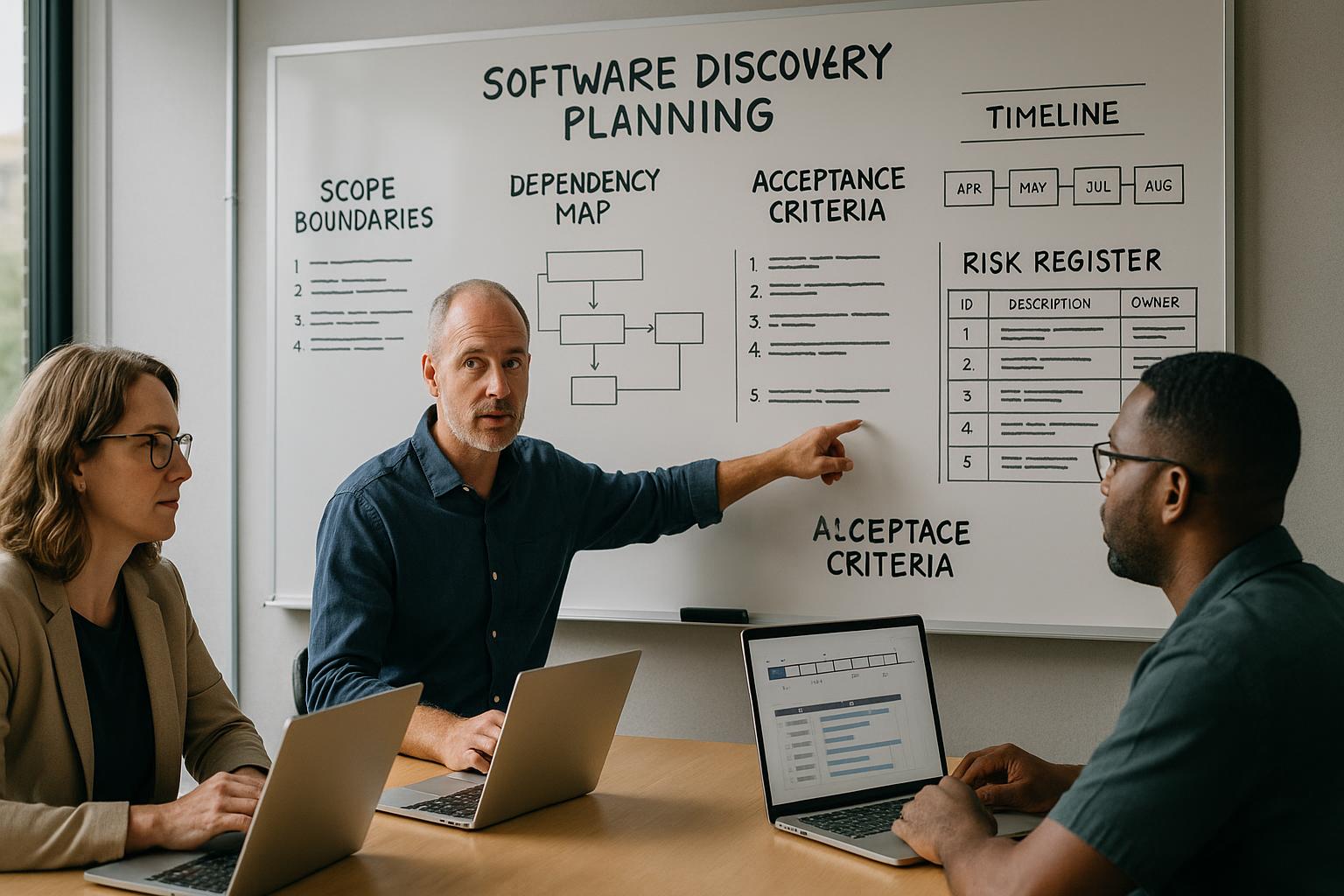
LLM security operating model: from OWASP Top 10 to daily controls Most teams do not struggle with LLM security because they cannot list the OWASP Top 10. They struggle because risk taxonomy and delivery execution live in different worlds. Security teams publish threat categories. Product and platform teams ship features under deadline pressure. Operations teams manage incidents without shared control language. The result is predictable: controls are inconsistent, blind spots persist, and security maturity depends on individual heroics. The practical fix is an operating model that converts OWASP risk classes into daily controls, release gates, monitoring signals, and incident response pathways. In other words, move from “we are aware of prompt injection” to “here is the exact prevention, detection, and escalation behavior for prompt injection in this lane, with named owners and measurable thresholds.” That conversion is what separates security theater from trustworthy operations. This article is for enterprise operators who need actionable security discipline for LLM systems in active production contexts. It focuses on recurring execution mechanics: risk-to-control mapping, lane tiering, secure release routines, runtime observability, and adaptation loops. The objective is to keep delivery moving while materially reducing exposure.
Why OWASP Top 10 alone is not enough
The OWASP LLM Top 10 is a strong threat model index, but by itself it does not tell teams how to run daily operations. It identifies risk categories such as prompt injection, insecure output handling, data leakage, excessive agency, supply-chain weaknesses, and model denial conditions. What it does not define is who decides control depth, which evidence is required before release, how detection is instrumented, or what happens when controls fail. Without that operating layer, teams usually drift into one of two failure modes. First, under-control mode: high-impact features ship with minimal safeguards because launch pressure wins. Second, over-control mode: every change requires heavy manual review and delivery throughput collapses. Both modes are expensive. Under-control generates incident and trust debt; over-control generates opportunity cost and bypass behavior. A good operating model avoids both by applying proportional controls tied to risk tier and business impact. Low-risk lanes get lightweight automation-friendly guardrails. High-risk lanes get deeper controls and denser review. The key is consistent decision logic, not one-size-fits-all security process.
Core architecture: four security loops that run continuously
Operational LLM security works best as four linked loops: prevent, detect, respond, and adapt. Prevention reduces probability of known failures. Detection identifies control misses and anomalous behavior quickly. Response contains impact and restores service safely. Adapt converts incidents and near misses into improved controls and test coverage. Prevent loop: includes prompt hardening, tool-permission boundaries, data filters, output validation, and environment isolation controls. Detect loop: includes policy-hit telemetry, anomaly signals, abuse indicators, and trace completeness monitoring. Respond loop: includes triage severity protocol, role-based escalation, containment patterns, and communication templates. Adapt loop: includes root-cause analysis, control updates, regression tests, and portfolio-level learning distribution. These loops should be visible in weekly lane operations and monthly portfolio governance. If any loop is weak, security quality degrades over time even when initial setup looked strong.
From OWASP categories to control families
A practical translation pattern is to map each OWASP risk area to one or more control families. Control families should be reusable across lanes and configurable by tier. Prompt injection and instruction manipulation: source trust labeling, context sanitization, policy-aware planner constraints, and tool-call prechecks. Sensitive data exposure: input/output redaction pipelines, data minimization rules, destination allowlists, and retention policy enforcement. Insecure output handling: output schema validation, execution-context sandboxing, and downstream action gating with reason codes. Excessive agency and permission abuse: action-class limits, autonomy budgets, scoped credentials, and mandatory approvals for high-impact actions. Supply-chain and dependency risk: provider inventory, integrity checks, failover modes, and third-party incident monitoring. Denial-of-service and reliability attacks: rate controls, quota budgets, timeout/retry policy, and graceful degradation pathways. When mapped this way, OWASP becomes a practical design input for day-to-day control engineering.
Lane risk-tiering and security depth calibration
Not all LLM lanes deserve identical control density. Define at least three tiers: Tier 1 low-impact internal assistive lanes, Tier 2 medium-impact operational decision-support lanes, and Tier 3 high-impact external or regulated lanes. Tie each tier to mandatory control baselines and approval depth. Tier 1 lanes can emphasize automation and sampled review: strong logging, basic redaction, and bounded tool access. Tier 2 lanes require stricter output validation, structured approvals for selected actions, and tighter anomaly monitoring. Tier 3 lanes should include dual approvals for critical actions, adversarial testing before release, enhanced provenance requirements, and incident drill readiness. Tier assignment should be reviewed when scope changes, data classes change, or autonomy expands. Stale tier classifications are a common hidden risk source because controls remain calibrated for old conditions.
Secure release model: preflight checks that actually block risk
Release gates are where many programs either overburden delivery or miss critical issues. Keep gates focused and evidence-based. A good preflight checklist covers six areas: threat-model coverage, control implementation completeness, test suite status, observability readiness, rollback readiness, and ownership confirmation. Threat-model coverage: has each relevant OWASP category been assessed for this lane and scope? Control completeness: are required tier controls active, versioned, and mapped to owners? Test status: do unit, scenario, and adversarial tests pass for affected components? Observability readiness: are key decision traces and alert signals live? Rollback readiness: can we revert safely under load? Ownership confirmation: are on-call and escalation roles explicitly staffed? For low-risk changes, automate as much of this checklist as possible in CI pipelines. For high-risk changes, keep human review but constrain it to decision-critical evidence. This preserves speed while maintaining control integrity.
Daily control operations: what teams should actually run
Security maturity is built in daily routines, not periodic audits. Minimum daily routines should include: policy-hit trend scan, exception queue triage, high-severity event review, drift and anomaly scan, and unresolved critical follow-up. Policy-hit scan identifies unusual spikes in blocked or escalated actions that may signal attempted abuse or threshold misconfiguration. Exception triage ensures every new issue has severity, owner, and SLA. High-severity review confirms containment status and communication alignment. Drift scan checks for behavior changes after model/prompt/policy updates. Follow-up review prevents critical issues from aging silently. For teams with lower volume, these routines can be batched into a single daily control review. For high-volume enterprise lanes, run shorter checks twice daily. The cadence should reflect risk exposure and operational throughput.
OWASP-informed monitoring dashboard design
Monitoring should be mapped to risk categories and role needs. Operators need a queue-centric view: active alerts, exception backlog, SLA clock, and containment status. Security owners need category trends: injection attempts, data leakage blocks, permission escalations, and output-validation failures. Product owners need delivery-security balance: throughput impact, approval latency, and false-positive friction. Executives should see a condensed security health panel: incident severity trend, unresolved critical age, control-coverage completeness, and risk-adjusted delivery velocity. Keep executive dashboards decision-focused. Too much detail at this level slows strategic action. Alert quality matters more than alert quantity. Use severity and context thresholds to avoid alarm fatigue. A noisy dashboard undermines security discipline by training teams to ignore signals.
Incident response playbook for LLM-specific failures
LLM incidents often differ from classic software incidents because behavior failures may involve content, policy logic, model drift, and human workflow interaction simultaneously. Response playbooks should reflect this complexity. Use a structured response sequence: identify affected lanes, classify incident type by OWASP category, contain action pathways, assess user/business impact, communicate scope and next steps, remediate root cause, validate with regression tests, and record lessons into control backlog. Containment options should be pre-defined: disable specific tools, lower autonomy tier, enforce stricter output filtering, switch to supervised mode, or pause lane execution. Predefined containment paths reduce decision latency during pressure moments. Communication templates are mandatory. Internal teams need operational clarity; external stakeholders need transparent impact framing without speculation. Trust erosion during incidents is often driven more by unclear messaging than by technical failure alone.
Adversarial testing: from security exercise to release requirement
Adversarial testing should not be occasional theater. For medium and high-tier lanes, it should be part of release criteria. Build scenario packs for prompt injection, tool misuse, context poisoning, policy bypass attempts, and output exploitation patterns. Score each scenario by exploitability and impact. Prioritize remediation for high-impact/high-probability combinations first. Keep lower-risk findings tracked but avoid stalling releases for low-material edge cases unless required by policy. Every significant incident or red-team finding should produce a persistent regression case. This is how security posture compounds. Without regression discipline, teams solve the same problem repeatedly in different forms.
Supplier and dependency security controls
LLM systems rarely operate in isolation. Model providers, vector stores, retrieval APIs, and orchestration layers all introduce risk. Build a dependency inventory per lane and classify each dependency by criticality and trust exposure. For critical dependencies, define fallback behavior: degraded mode, failover provider, or controlled pause. Verify these fallback paths through drills, not assumptions. A documented contingency that never runs in test is operational fiction. Include supplier-origin incident metrics in portfolio reviews. External dependency volatility should influence architecture and procurement decisions. Ignoring this leads to repeated remediation churn and unstable delivery forecasts.
Security ownership model: who does what weekly
Security reliability depends on ownership clarity. At minimum, define five roles: lane product owner, platform security owner, governance/policy owner, incident commander, and enablement owner. Each role should have explicit weekly responsibilities and decision authority. Product owner: ensures acceptance criteria and user workflow constraints are clear. Platform security owner: maintains controls, telemetry, and secure release mechanisms. Governance owner: calibrates policy thresholds and exception handling standards. Incident commander: coordinates response during high-severity events. Enablement owner: ensures teams understand controls and escalation behavior. Document delegation rules for absences and peak load. Security programs fail surprisingly often due to unplanned ownership gaps during incidents.
Security economics: measuring protection without killing throughput
Security programs are often judged by incidents avoided, which is important but incomplete. Track a balanced economics view: prevented-loss indicators, remediation cost trend, and delivery friction cost. If friction cost grows faster than risk reduction, control design may need recalibration. Useful security-delivery metrics include approval latency by tier, false-positive block rates, critical incident recurrence, and cycle-time movement under current control set. Combined, these show whether security is functioning as a delivery enabler or a hidden bottleneck. Use risk-adjusted throughput as a portfolio KPI. High throughput with rising severe incidents is fragile progress. Lower throughput with stable trust and declining incident severity may be healthier in high-impact contexts.
90-day execution roadmap: OWASP to daily control maturity
Weeks 1–2: map active lanes to OWASP categories, define tiers, and publish control baselines with ownership. Weeks 3–4: implement core preventive controls and release preflight checks. Enable trace capture and baseline alerts. Weeks 5–6: activate daily control reviews, exception SLAs, and structured incident response templates. Weeks 7–8: run adversarial scenario packs, prioritize remediation, and add regression coverage for key findings. Weeks 9–10: calibrate thresholds to reduce false positives while preserving security posture. Validate supplier fallback paths. Weeks 11–12: run executive review with tier-by-tier scale/hold/remediate decisions and next-wave security investment priorities.
Common anti-patterns and rapid fixes
Anti-pattern: OWASP checklist exists but no daily cadence. Fix: institutionalize daily control review and exception triage routines. Anti-pattern: all lanes use identical controls. Fix: tier controls by business impact and reversibility. Anti-pattern: security catches issues late in release cycle. Fix: shift control testing left into CI and preflight gates. Anti-pattern: incidents are closed without control updates. Fix: require remediation artifacts plus regression cases per major finding. Anti-pattern: dashboards overflow with low-signal alerts. Fix: tune thresholds by severity and decision relevance.
Executive readiness checklist for LLM security scale
Before expanding lane autonomy or adding new high-impact use cases, leadership should confirm: tier controls are active and tested; critical OWASP categories have mapped controls and evidence; unresolved critical exceptions are within SLA; incident playbooks were rehearsed recently; supplier contingencies are validated; and security-delivery metrics remain balanced. If two or more conditions are unclear, scale should be constrained until gaps are resolved. This is not caution for its own sake—it is cost control. Security debt becomes exponentially expensive when discovered after broad rollout, especially when customer trust and contractual obligations are already exposed.
OWASP-to-control matrix by operating layer
To make OWASP usable in daily operations, teams should maintain a matrix that maps each top risk to specific controls across four layers: design, runtime, oversight, and response. This avoids fragmented ownership where one risk is “everyone’s job” and therefore nobody’s daily priority. For prompt-injection risks, design controls include source-separation architecture and instruction-priority rules. Runtime controls include untrusted-input isolation, planner constraints, and pre-tool policy checks. Oversight controls include sampled review of blocked action logs. Response controls include rapid containment by downgrading lanes to supervised mode and updating injection regression suites. For sensitive-information disclosure risks, design controls include data classification and minimization contracts. Runtime controls include redaction at ingress and egress, destination allowlists, and retention limits. Oversight controls include periodic leakage simulation and sampling audits. Response controls include immediate token/key rotation when exposure is suspected, user notification pathways, and evidence-preserving forensic capture. For excessive-agency risks, design controls include explicit action classes and autonomy budgets. Runtime controls include scoped credentials, per-session action quotas, and hard blocks for irreversible actions without approvals. Oversight controls include autonomy-expansion review gates. Response controls include fast rollback to lower-autonomy profiles and human re-approval for pending queues. For insecure-plugin or tool-chain risk, design controls include trust-tiered connector architecture and dependency segmentation. Runtime controls include sandboxed execution and strict parameter validation. Oversight controls include supplier health monitoring and update-review workflows. Response controls include plugin kill-switch use, substitution playbooks, and dependency incident postmortems shared portfolio-wide. When this matrix is visible and actively maintained, OWASP categories become operational responsibilities instead of static awareness bullets.
Control coverage heatmap and gap-closing workflow
Enterprises should run a weekly control coverage heatmap for each active lane. The heatmap should show three states per OWASP category: covered, partially covered, or uncovered. It should also indicate confidence level and evidence freshness. A stale “covered” state is effectively partial coverage in practice. Gap-closing should follow a strict sequence. First, classify gap severity by potential impact and exploitability. Second, assign temporary compensating controls if full fix cannot ship immediately. Third, schedule permanent remediation with owner and due date. Fourth, define validation evidence required to close the gap. This sequence keeps risk visible while preserving delivery momentum. Do not close gaps based on implementation claim alone. Closure requires evidence: test pass records, runtime policy hits where relevant, and review sign-off from responsible roles. Evidence-first closure prevents recurring “fixed on paper” failures that resurface in production. Maintain historical gap trend by lane. Repeated gaps in the same categories often signal deeper design weaknesses, inadequate enablement, or unrealistic release expectations. Trend visibility supports better strategic investment decisions.
Secure prompt lifecycle management
Prompts are operational assets and should be managed like code. A secure prompt lifecycle has stages: draft, review, controlled test, staged rollout, live monitoring, and periodic retirement/refactor. Unmanaged prompt changes are a frequent source of silent behavior drift. During review, prompts should be checked for ambiguous instruction hierarchy, weak refusal boundaries, and accidental data exfiltration pathways. During controlled test, run scenario suites including malicious or conflicting context to evaluate resilience. During staged rollout, use canary cohorts with enhanced monitoring and clear rollback criteria. Prompt versions should be linked to policy versions and model versions in trace logs. When incidents occur, this linkage dramatically shortens investigation time and avoids speculation-driven blame. It also helps teams identify whether remediation should target policy logic, prompt design, or model/provider settings. Prompt retirement matters too. Legacy prompts can remain active in low-traffic paths and create unseen risk. Periodic cleanup of obsolete prompt variants reduces attack surface and operational complexity.
LLM security runbooks: minimum set every enterprise should maintain
Security maturity improves when teams have concise runbooks for recurrent scenarios. Minimum runbook set should include: prompt-injection containment, data leakage triage, compromised tool connector response, privilege escalation response, degraded-model behavior handling, and suspicious-output incident communication. Each runbook should include trigger conditions, first five actions, owner sequence, escalation conditions, communication templates, and closure evidence requirements. During incidents, teams do not need long prose—they need fast, clear execution steps. Runbooks should be tested in drills and updated after real incidents. Untested runbooks are often outdated at the exact moment they are needed most. Include runbook freshness checks in quarterly security governance routines. Keep runbooks accessible to both technical and operational roles. Security response often fails at handoffs between those groups, so shared operational language is critical.
Identity and key-management controls for agentic LLM systems
LLM security is strongly affected by how credentials and identities are managed in tool-invoking workflows. Use ephemeral credentials whenever possible, scoped by task intent and time window. Avoid long-lived shared tokens in orchestration layers. Map every tool call to a principal context and store that mapping in trace logs. This creates accountability and supports forensic response. Calls without clear principal attribution should be treated as high-risk anomalies. Apply key-rotation discipline with automated reminders and incident-triggered emergency rotation playbooks. A mature program can rotate critical credentials quickly without disabling the entire workflow stack. Use secret access policies tied to lane tier. High-tier lanes should require stricter secret-access constraints and stronger audit trails than low-tier assistive lanes. Uniform secret policy across all lanes usually under-protects critical contexts or overburdens low-risk ones.
Security communication cadence for non-security stakeholders
Security operating models fail when non-security teams only hear about controls during release blocks. Establish a recurring communication cadence that keeps stakeholders informed without flooding them with technical detail. Weekly lane-level updates should cover actionable status: major risks observed, control changes, unresolved critical issues, and impact on delivery plans. Monthly portfolio updates should cover trend movement, major decisions, and required investments. Use plain language and consequence framing. Instead of “policy false-positive increased,” say “approval delays increased by X% in lane Y due to stricter output filter; mitigation plan is Z.” This improves decision quality and cross-team trust. Communication should also include positive signal: where controls reduced incident pressure or enabled safer autonomy increases. Security seen only as blocker loses organizational support over time.
Early warning signals that your LLM security model is drifting
Mature teams watch for drift signals before major incidents. Signal one: sudden rise in manual overrides without corresponding policy updates. This often means controls no longer fit real workflow behavior. Signal two: alert volume rises but confirmed-incident volume stays flat, indicating threshold quality decay and growing alert fatigue risk. Signal three: repeated exceptions in the same OWASP category across multiple lanes, which usually points to shared control weakness rather than isolated mistakes. Signal four: approval latency increases while throughput targets remain unchanged, creating hidden pressure for unofficial bypass behavior. Signal five: model/provider updates produce behavior changes that cannot be explained quickly because version traceability is incomplete. When these signals appear, do not wait for quarterly review. Trigger a focused security recalibration sprint with clear scope: threshold tuning, control-gap closure, runbook refresh, and communication reset to stakeholders. Fast recalibration is cheaper than post-incident recovery and protects both delivery confidence and trust posture. A final practical rule helps keep security honest: every major security review should end with three explicit outputs—one control change, one workflow change, and one measurement change. If reviews end only with discussion, risk posture rarely improves. This three-output discipline keeps security progress tangible, clarifies accountability for follow-through, and prevents drift back into abstract governance language. ---BODY_END--- ===ARTICLE_END===